Worldview
Мы загрузимся через одно мгновение!
And again greetings to you, my dear, beloved, kind reader! Today I will tell you about the most important thing in a person and their place in the world, which seems to me important, integral, and best. Please do not judge me, for I know that every person has their own life path, a road to comprehending the highest things in life; and, besides, I am only beginning my youth and becoming acquainted with the outlines of the depth of the human inner world, the beauty of the world around us, and the wisdom of the great cosmos.
The most difficult thing in a Worldview is understanding, realizing, and formulating one's own definitions for the most important and complex phenomena in life. More about all sorts of important concepts can be found in the section «Light!». And about some earthly accompanying elements I tell here.
The question that troubles me and seems to me the most important sounds as follows. Why did the Soul come to Earth? To Create. And this answer is the most important word of all the material with which you, reader, may become acquainted further.
I can confidently proclaim that every person comes to Earth not by chance. Each has their own lessons, tasks, abilities, possibilities, and dreams. But each can do everything to be fully happy.
In this text I will tell about my worldview, I will tell about the foundations of my experiences, aspirations, and attitudes toward the world. I will tell what, how, and why I create, make, do. It was a very good invention of the great, talented, and bold writers in the history of literature — to tell about all this, uniting in a single text the very most important thing.
If you, my dear reader, should suddenly turn out to be a «Вы» — by all means! If you are a writer, biographer, scholar, or some other kind person, you may boldly use my text as a most real manifesto, because that is precisely what it is. This is my aesthetic, artistic, semantic program. I have not yet invented some word of my own, but my direction can be called metaromanticism; further I will tell why I choose for now precisely this good word. When my word appears — I will certainly write it here! And perhaps it will be Darinism or something else connected precisely with me.
So, let me rather share with you (or You), reader, the most secret thing I have! I tell about the most important things and frame these thoughts in theses. Here is what I consider the Truth.
1) In the beginning was the Logos.
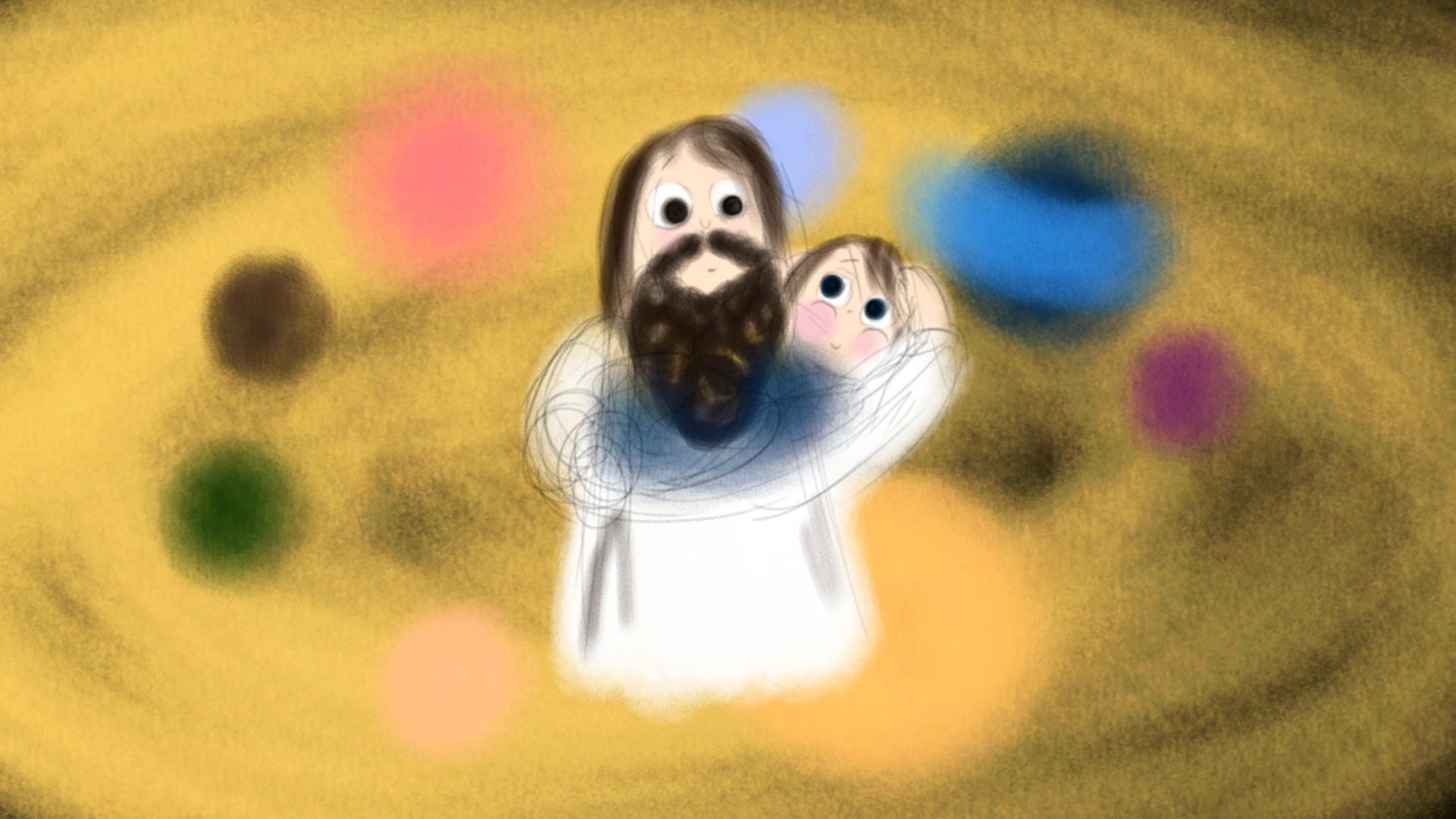
I first discovered this knowledge for myself when I watched Mikhail Semyonovich Kazinik's film «The Bach Effect». It was a small fragment of the narrative that explained all the music of Johann Sebastian Bach, its triune divine structure, founded on the manifestation in the first musical phrase of one of the works of the Golden Ratio. It appears first on the right side of the keyboard, then the melody is born in its very centre, and then the Golden Ratio is born again, only on the left side of the keys. This shows that in Bach's music there lives a great structure, and this is mathematics, painting — in full measure the Logos. This affirms the place of the great composer in our Universe.
Indeed, if one translates the word from the original language of the Bible, it turns out that in the beginning was the Word — Открой меня!/08. Свет!/Логос. That is, from the very beginning of our Great Universe our Creator created the world order, and this world order can be discovered in everything in our world.
There are great geniuses in whom ordered structures form the whole world order of their creativity. That is, the more instruments of measuring the Logos are applied to the creation of a genius, the more the affirmation of the Logos grows in all its manifestations. Thus, the Logos is confirmed by mathematical regularities, by sensory, harmonic, artistic beauty, from which the whole human being trembles, that is, rises to the level of understanding the very primordial energy of Creation. The Logos not only explains this energy — that is, it can be known and understood by turning to the instruments of reason — but it fully feels it — that is, it turns a person toward the instruments of feeling, gives a person the possibility of living through a work holistically. Thus, the Logos exists in the creation of a genius.
I believe that the Logos, our world order, is knowable and creatable — I made my programmatic cartoon about this.
Accordingly, the Logos presupposes conscious creation. When a person creates their work, they must always, invariably remember God and strive in everything precisely toward Him. The teaching that helps a person strive in everything toward the Creator can be called Scripture. But there exist a great multitude of its interpretations, and in general it turns out that, in fact, it is not obligatory to possess a set of knowledge from a particular teaching in order to create truly bright beauty.
The great writers, artists, masters — they are above all Creators. They create Logoi equal in magnitude to our universal Logos. That is precisely why we can pass to the next important thought.
2) Man is like God only through Creativity.
One of my mentors explained the most important thought of the Renaissance in this way. It was precisely at the beginning of the Modern Era that man understood how vast our world is thanks to the Great Geographical Discoveries, and how vast the world of Man himself is thanks to the reinterpretation of Christianity. And he begins to find himself. Man begins to understand that it is impossible to live further as in the everyday life of the Middle Ages. Man cannot be created vicious; the Holy Scripture is interpreted incorrectly, because if the body of Man is sinful, then that means there is an imperfection in the Creation, and consequently, in the Creator. One cannot doubt the wisdom of the Creator, because it was the Creator who made our world. I think that this thesis was arrived at by the Renaissance not without the help of mystical teachings, but this is my supposition.
Man moves away from the Creator when he becomes the opposite of His properties. He becomes attached to material goods, reproduces ready-made forms of culture, creates nothing new of his own; thus he loses his uniqueness, his identity, and as an inevitable consequence — his integrity. The property of the Creator is Creation. Kabbalists also tell of such properties as wisdom, knowledge; all this is connected with the ordering of our world and ascends precisely to Creation.
It turns out that for a person to be great, they must create, create something new, their own. But they must create their own not simply for the sake of it; it must be not simply new and organized into a Logos — creativity must be directed not only by reason but also by the heart toward the Creator, it must be directed spiritually toward the Light. And therefore we pass to the next important thesis.
3) The Creator is absolutely good.
This phrase is very important for Kabbalah. I think that it is foundational for early, genuine Christianity, because it cancels all dogmas of any religions, our conceptions of the world. God is absolutely good, because He gives man choice. God may give trials, but the choice — above all, the spiritual one — always remains with Man himself. Man can choose his road, and it turns out that if this choice led to consequences unfavourable in the person's own opinion, then that is only the responsibility of the person himself. I am also convinced that everything is for the best in this best of worlds.
Every work of a great writer, composer is connected with life-affirmation. It proclaims the Открой меня!/08. Свет!/Свет. And I begin to found a methodology that helps to know and to see this Light.
When a person creates, creates an artistic work, and makes a discovery, they are absolutely good. First, because in a state of creation they cannot be evil, because they are carried away by their work, they are in a state of enthusiasm; during creation they are by nature incapable of destruction. Second, because a great work contains the world order, the Logos, and therefore goodness, life-affirmation, and Light.
But it is not enough to create simply a bright work for it to be great. The following important property will help us in this.
4) Goodness must be intelligent, and the intellect — good.
There must be intelligent creativity, intelligent goodness. It is not enough to create something bright, beautiful, sweet. Every image must be permeated with axiologically directed cultural knowledge. It must be visible that the person, as a creator, is intelligent, but not over-clever; wise, but understandable; bearing truth, but doing so in an inimitable way.
It is pleasant for us to look into the eyes of intelligent actors on film, joyful to see thinking artists on stage. Every creation must be conscious.
At the same time it is also important to note that the intellect too must be good. If a person is evil and sits on their knowledge, offending and humiliating others, then such an intellect is worth a penny. In its sum of knowledge its soul does not participate — and that means something very, very important in it is lost. And as we remember, a person is fully revealed as a Creator when they are whole. Thus we unite everything into the following thought.
5) A Creation must be bright, intelligent, and great.
First, a creation must be bright, because the Light is the foundation of divine energy. An axiologically meaningful work, value-directed, comes to the Creator, because it ascends to His level.
Second, a creation must be intelligent, so as to have a foundation supported by knowledge of the great history of culture, of the discoveries made before our creation. One can show one's knowledge — and then together with the Light it will grow to wisdom.
Third, a creation must be great. For this one must create a world of creation of our own, equal in scale to the world of the Creator. One must encompass all scales, permeate with the Light all the themes that interest us, extend space to the Universe, and grant eternity to time. The great is manifested in the Logos — that is, out of nothing, out of a point, we unfold our Creation; we speak also about the inner world of a person, we make his world resonate with the world of cosmic stars; we unfold our creation to the scales of the whole Universe. Since it is founded on the Light of the Creator and on knowledge, it acquires its Logos.
Thus we arrive at a triunity — the heart striving toward the Light, the mind strengthening itself in knowledge, and the soul discovering the Logos. Heart, mind, and soul receive their highest realization and union in creation, that is, they draw near to the Creator.
6) Since there is no absolute evil, it cannot be depicted.
I have always been very upset when some image in a cartoon is made negative. Precisely in the American way, absolute evil. If in the Soviet tradition evil is given the possibility of re-education, then for some reason Western culture, beginning from the 20th century, readily depicts this non-existent absolute evil.
But the most terrible evil cannot be drawn. It is impossible to personify the feelings that torment a person — grief, pain, horror, despair. It is even harder to clothe the feelings that are born in the very heart of a person — anger, revenge, envy, spite. And they must remain unpersonified. This simply does not need to be done. The most terrible choice is invisible; it is very easy for us to shift responsibility onto circumstances, demons, to say that «the evil one tempted» us. Even if we do not see the person himself, we invent a personification for evil, which the Creator never does!
Therefore if I ever should have negative characters, which is inevitable, because every person is not without sin and must pass through their own spiritual path — they will certainly not be disgustingly frightening. They are simply a person; their shell may be the same as that of a good one — the most terrible and complex thing they have to do is on their spiritual level. It is very easy to make evil ugly, but then the essence of its spiritual work is lost, and accordingly on a deeper level the spiritual work of the viewer is lost («he is scary-looking, that is why he is so evil»), whereas the most subtle and important work is always spiritual. Herein lies the most complex task of visual art — to show this spiritual work without surrendering to a primitive anthropologism of personifying evil.
For a human Creation to be like the divine, one must become like the Creator. He is absolutely good and made all phenomena in our life neutral. Every evaluation and result of a Creation depends only on the person himself — will they take an instrument in their hands and only multiply evil, or will they make a good, life-affirming picture? Likewise about the character's choice — what, in turn, will they create? My favourite expression about this is composed on the motifs of Bunin: «Out of a log one can make both a cudgel and an icon».
The great Creator made the world in such a way that His Light permeates our whole world through Man. If Man creates his world, permeating it with Light, his world too turns out great. Accordingly, in turn, the heroes, the characters of this world too can become Creators — they can create great changes in the heart of the viewer.
7) If there is an idea — then the instrument will jump into your palm by itself!
I know that a person can create anything at all, because they need to start from something. They may not yet have an education or something seemingly necessary. But if there is in their soul the Light of a higher design, if they want to embody this idea — they will certainly find how to do it.
8) A person is always whole.
I speak about this in more detail on the corresponding page. That means that if a person has been hurt, told that they cannot do something, offended, this in no way diminishes the person's own road to God. And that means that any suffering is temporary, and the genuine Light always accompanies a person — it is simply that at moments of particular spiritual difficulty it is harder to seek. And the brighter the genuine Light will shine in the person's soul and create in them great changes for the better. That is precisely why it is important to remember the following point.
9) A person always has a choice.
This is one of the most wonderful instruments of a person, which the Lord gave them.
10) Everything that comes from God is Light.
And about this too I have told on the page about Открой меня!/08. Свет!/Свет.
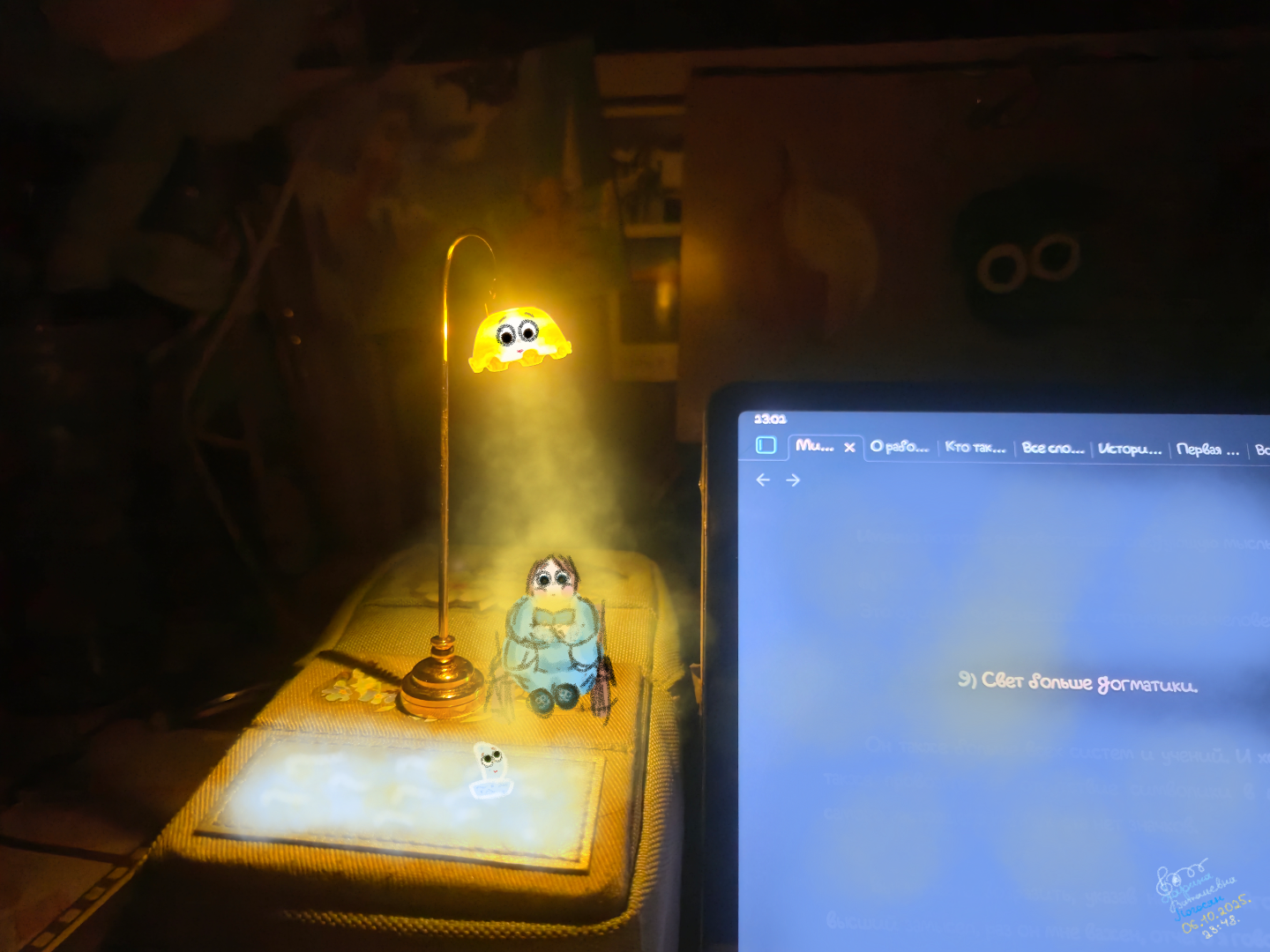
11) Light is greater than dogma.
Light is greater than all systems and teachings. And although I have spoken more than once about Kabbalah, it too proclaims the absence of symbolism in material embodiment. A true, most genuine follower of God has no precisely such signs.
That is precisely why I do not understand the symbolism of religious teachings; it is alien to me, because any ritualization distances one from God.
You may object, pointing to my own berry. The berry symbolizes the fruit; it is an embodied higher design; since it is important to me, why do I speak of something else? And therefore we will pass to a very important thought.
12) There is a higher boldness!
This is a phrase of A.S. Pushkin, after which M.S. Kazinik's series of programmes about the creations of geniuses was named. The outstanding culturologist considers not only great music but also great literature.
The higher boldness is the boldness of Creation. Surely you (or You), my kind reader, have noticed that many of my thoughts are connected with Creation, Creativity, the Creator, and similar words.
I believe that the higher design can be embodied in our world. Moreover, the higher design can be swift. It can be embodied suddenly, at a hop-skip, and greatly.
Genuine boldness consists in rejecting everything alien, heeding God, and truly embodying what comes from Him.
That is precisely why such a direction as early German Romanticism is important to me — it is a direction in the history of literature, music, and culture as a whole, in which the creators believed that it was possible to embody the higher design. Disappointment, two-worldness, and the sense of the impossibility of doing this came only with late Romanticism.
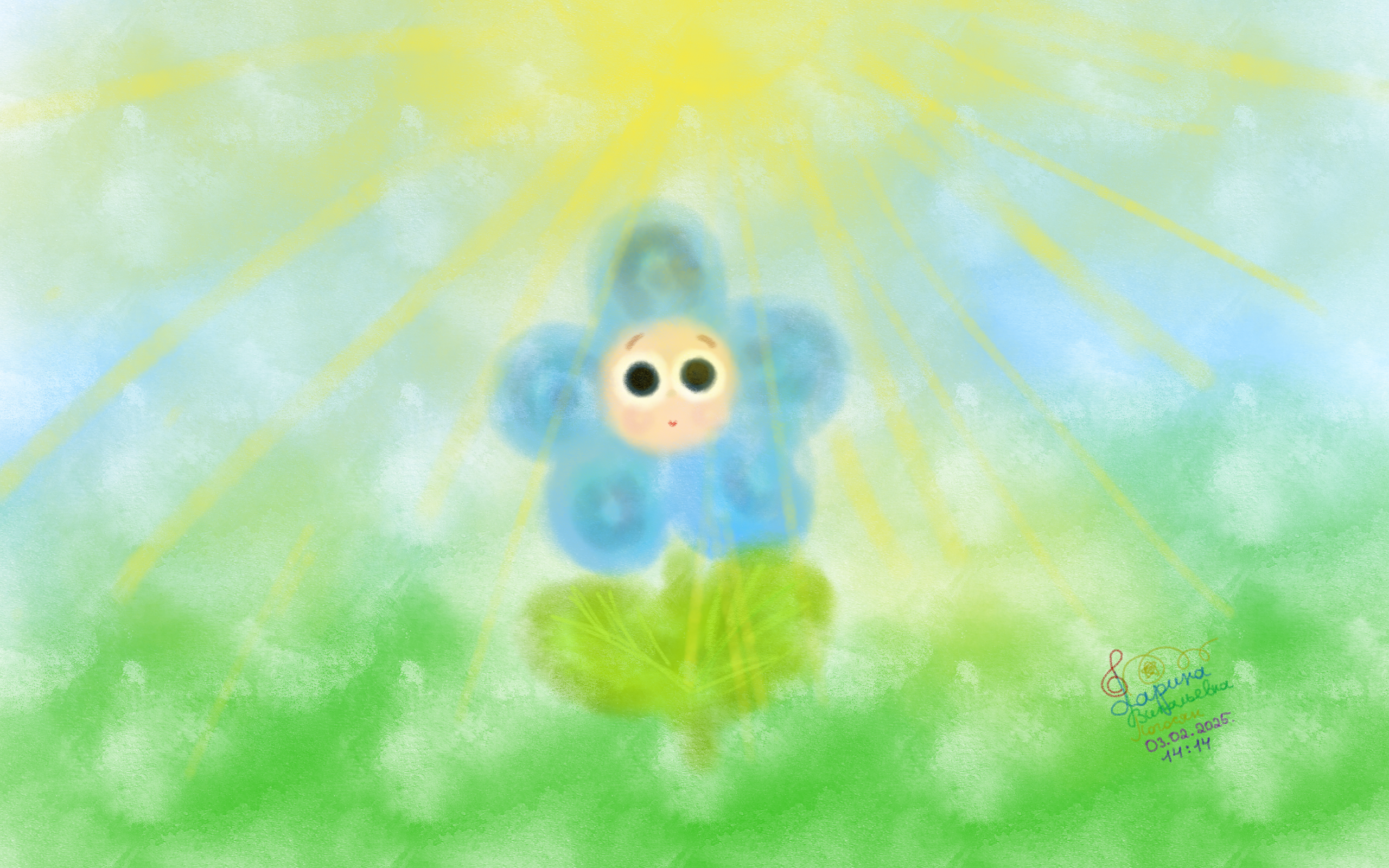
And at the very beginning of this artistic direction man believed in the higher. For the German Romantics a very important image became Blaublume — it is a little blue flower that is a symbol of the perfect poetic ideal; it is the absolute idea, the higher design, eternity, truth — the perfection toward which the poet strives. It takes its origin from German folklore, but it was Novalis in his work «Henry von Ofterdingen» who turned the little flower into the highest idea of creativity.
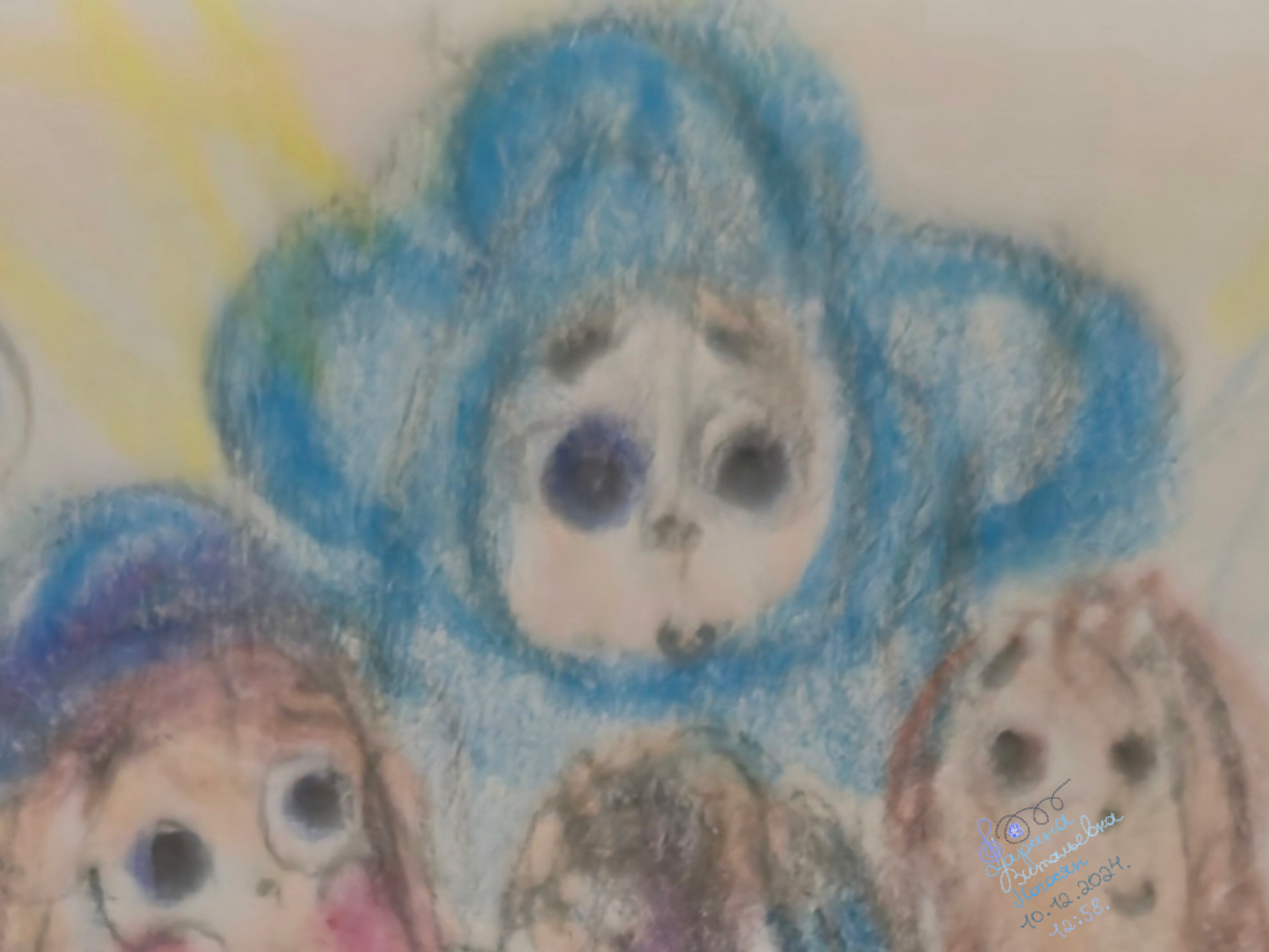
That is precisely why the image of the blue flower is undoubtedly very important to me. But since the little blue flower, though initially possible to attain, lives somewhere in a perfect world, and time and culture move forward, I decided to go somewhat further and made my own symbol, which signifies that the poetic ideal can be attained on Earth and can be fully embodied. And such a symbol for me is the bilberry, first, because it preserves the connection with the colour of the Heavens, with the colour of God, and second, by its nature it is a fruit, that is, it is the next stage of the flower's development, it is the embodiment of the higher design.
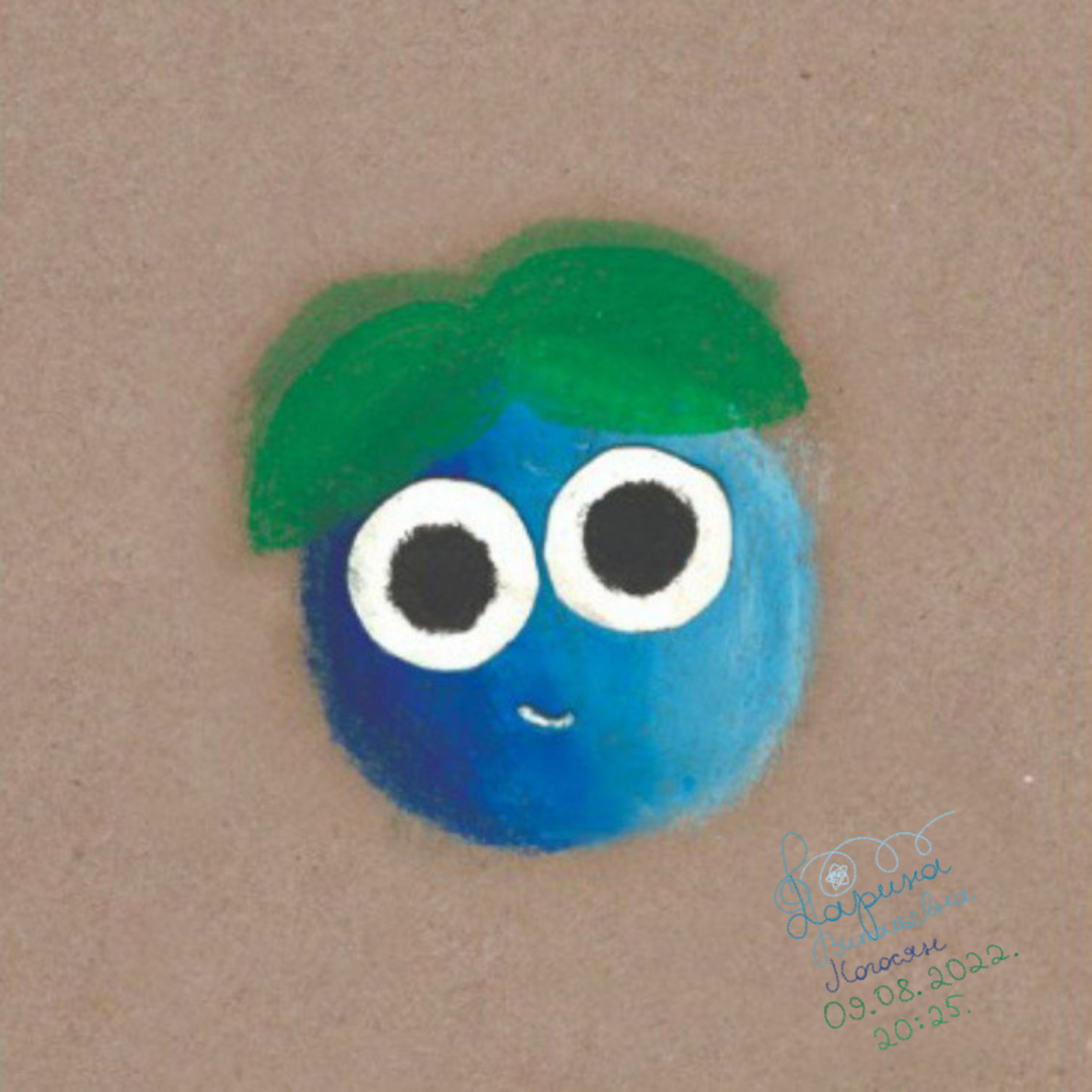
Its most correct designation is «Bilberry» («Vaccinium uliginosum»). And sometimes I call it «Blueberry», because this berry is also from the same family, called («Vaccinium myrtillus»). Or simply «Little Berry» or «Berry»
In the next century after Romanticism there was Neo-Romanticism. Now we live in the 21st century, and therefore it is time to return to the perfect, kind ideal, to reinterpret it, to develop it. That is precisely why my direction can be called metaromanticism. This word appears in P. Hamilton's work «Metaromanticism: Aesthetics, Literature, Theory» and the author invests in this word a system of sources of Romanticism that influenced the whole of European culture as a whole. That is, this word lives in different times, and therefore can also designate how Romanticism changes.
It is not set out in a systematic form; it is only just now appearing. I am grateful to God for all the higher knowledge and designs, and above all — for the possibilities of comprehending them, of embodying the miracle on Earth, and of creating our great Logos.
I believe in the miracle! And I believe that it can be created. And do you believe?
In conclusion I will share with you, my kind reader, a list of some books that help me study the foundations of worldview and seem to me spiritually close. You will encounter links to them more than once on the site:
- Evlampiev Igor Ivanovich, «Undistorted Christianity and Its Primary Sources»
- Viktor Maksimovich Zhirmunsky, «German Romanticism and Modern Mysticism»
- Alexander Alexandrovich Ishutin, «Some Theoretical Aspects of Holism as a Philosophical Position»
That is all for today's page. I think that I too can supplement it with something important, interesting, and engaging, because cognition, Light, and creation occupy a person all the time. The Soul came to Earth to Create!